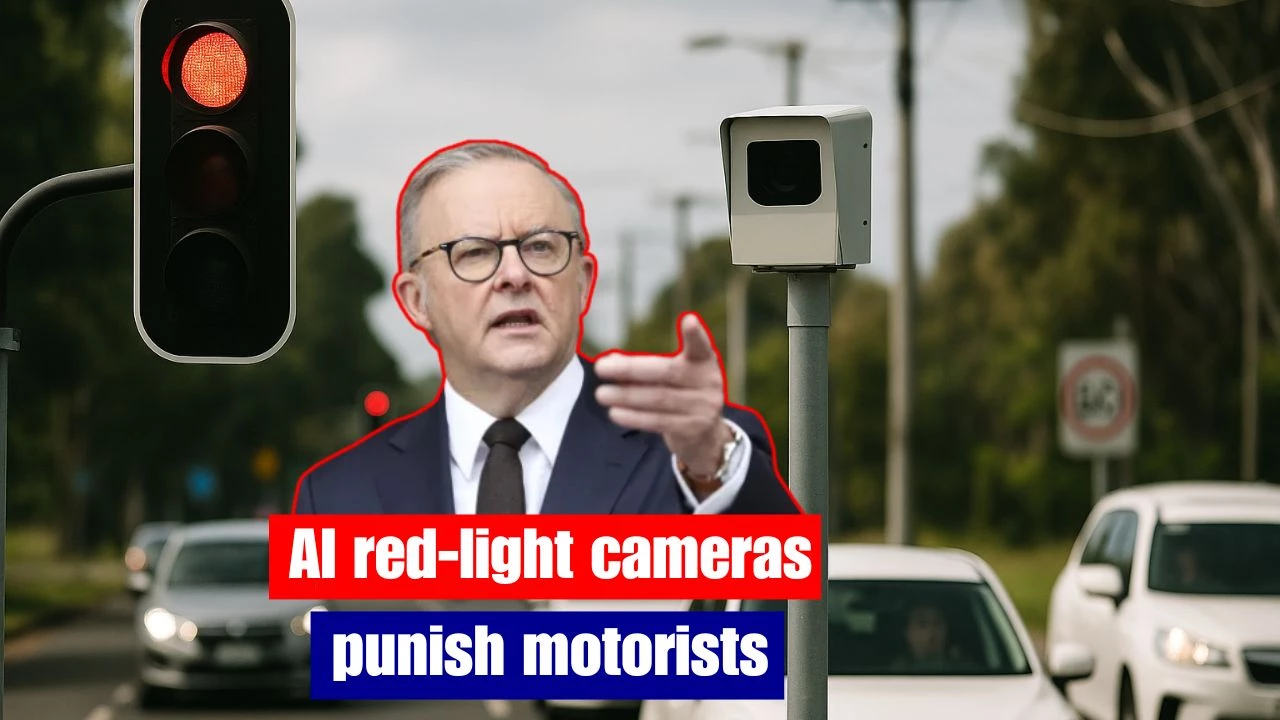
Australia’s New Red-Light Camera Upgrade – In a move that could reshape road safety, Australia has announced an upgrade to its red-light camera systems, incorporating artificial intelligence to automatically identify and penalize traffic violators. This development aims to tackle the alarming rise in traffic incidents at intersections throughout the country. The upgrade promises to enhance safety for drivers, pedestrians, and cyclists alike, potentially saving lives.
The new technology will be implemented starting in December 2025 as part of an ongoing effort to modernize road safety measures. With the integration of AI, authorities hope to ensure more effective enforcement of traffic regulations, particularly concerning red-light violations which have proven to be a significant issue in urban areas.
Background / Why it’s happening
In recent years, Australia has seen a steady increase in traffic violations, leading to numerous accidents and fatalities at intersections. In 2024 alone, more than 30% of all traffic-related fatalities involved a failure to comply with red-light signals. The increasing rate of violations prompted the government to explore technological solutions that could provide more efficient enforcement mechanisms.
What’s new / Key changes
- AI technology will enhance the ability of red-light cameras to capture violations accurately in real-time.
- The system will reduce human error, resulting in more consistent penalty issuance.
- Violators will receive instant penalties, reducing the need for lengthy reviews and disputes.
- The rollout will start in major cities and expand nationally, targeting high-risk intersections first.
Human angle / real stories
After hearing about the upgrade, Mary Wilson, a mother of three, expressed her relief: “Every day, I worry about my kids walking to school. The thought of reckless drivers running red lights near their school makes me anxious. This change gives me hope for a safer community.” Families like hers are welcoming the government’s proactive stance against dangerous driving habits.
In contrast, some drivers are concerned about potential issues with automated enforcement. “I sometimes worry about false penalties, especially if the AI misjudges a situation. It’ll be important that there’s a clear process for disputing any fines,” said Jake Sanderson, a frequent commuter in Sydney.
Official statements
Transport Minister Linda Grant stated, “This substantial upgrade to our red-light camera systems is about saving lives. By leveraging artificial intelligence, we can not only enhance enforcement efforts but also create a safer environment for all road users.” The Australian government is determined to set a precedent for road safety worldwide.
Expert analysis / data insight
Experts believe that the integration of AI could significantly reduce the number of repeat offenders. According to Steve Harlow, a road safety analyst, “Using AI can eliminate human biases and ensure that violations are detected based on standardized parameters. This could potentially reduce accidents related to red-light running by as much as 20% in urban settings.”
| Feature | Details |
|---|---|
| Technology Used | AI-powered motion and behavior analysis |
| Primary Purpose | Reduce red-light violations and improve road safety |
| Penalty Range | $415–$1,500 depending on the violation |
| Rollout Timeline | Starting December 2025 in major cities |
| Who Is Affected | All motorists at upgraded intersections |
Impact / What readers should do
Drivers across Australia should be aware of the new regulations and the potential consequences of violating traffic laws. This technological upgrade will mean stricter enforcement and larger penalties for offenders. Motorists are encouraged to familiarize themselves with the rules of the road and drive cautiously, especially around signalized intersections where these cameras are implemented.
The takeaway – calm, hopeful, responsible ending
The shift towards using AI in red-light enforcement highlights Australia’s commitment to improving road safety for all. While concerns remain about accuracy and fairness, there is a shared hope that this upgrade will lead to fewer accidents and a more responsible driving culture. As the rollout begins, communities will be closely watching to see the actual impact on road safety, with the expectation that safer intersections will lead to a brighter future for all road users.










Leave a Comment