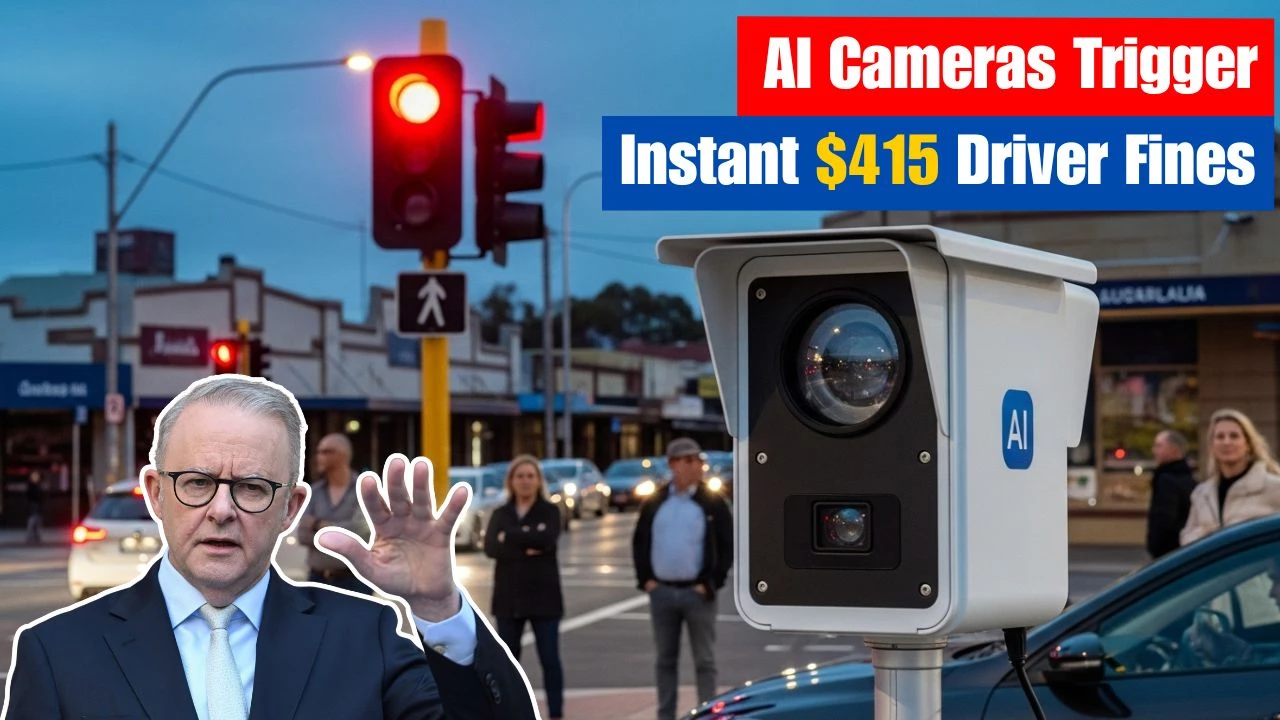
A New Era of Traffic Enforcement: Australia’s AI Red-Light Cameras Roll Out on December 1st — Starting December 1, 2025, Australia is set to enhance road safety with the activation of AI-powered red-light cameras across the country. These advanced systems will automatically detect rolling-red violations, where vehicles fail to make a complete stop at red lights. With an immediate fine of $415 for offenders, drivers must now be more vigilant than ever, as this initiative aims to reduce accidents at intersections.
Background: The Need for Change
Road safety has become a pressing concern in Australia, with statistics revealing a rise in accidents due to rolling-red violations. According to recent studies, rolling through red lights has been implicated in over 20% of serious intersection accidents. To combat this trend, the government has decided to implement AI technology to create a more efficient and reliable enforcement system. The introduction of these cameras is part of a broader strategy to leverage technology in transport safety management.
What’s New: Key Changes in Enforcement
- Activation Date: The new AI systems will be functional beginning December 1, 2025.
- Fine Amount: A fixed penalty of $415 will be issued immediately for rolling-red violations.
- Technology Used: These cameras utilize advanced AI for motion detection, analyzing various vehicle attributes in real-time.
- Nationwide Application: All drivers across Australia will be subject to this new enforcement protocol.
- Objective: Enhance road safety by reducing intersection accidents and ensuring compliance with traffic laws.
The Human Angle: Real Stories from Drivers
Emma Johnson, a 36-year-old professional from Sydney, shared her thoughts. “I often find myself just rolling through red lights if I think it’s safe. I didn’t realize how dangerous it could be, not just for me, but for others too.” Similarly, Mark Thomas, a bus driver with over 15 years of experience, expressed concern about how these changes might impact daily commuters. “I think the cameras are a good idea, but the fines being so high will add financial stress to many drivers,” he remarked.
Official Statements
Minister of Transport, Sarah Mitchell, stated, “This rollout marks a significant step in our ongoing efforts to improve road safety. The technology behind these cameras will ensure a fair and uniform application of the law, making our roads safer for all users.” Local authorities echo this sentiment, emphasizing the importance of compliance for community safety.
Expert Analysis: The Data Behind the Initiative
Transport safety expert Dr. Lisa Harris analyzed the expected outcomes of the new AI system. “The evidence shows that jurisdictions implementing similar technology have seen a reduction in intersection-related accidents by up to 30%. Our aim is to achieve comparable results in Australia to ensure safer road environments,” she explained.
Comparison: Previous vs. Current Enforcement
| Aspect | Previous Enforcement | Current (AI) Enforcement |
|---|---|---|
| Detection Method | Basic sensors | Advanced AI systems |
| Fine Issuance | Manual checks and delayed processing | Instant fines upon violation detection |
| Accuracy | Limited to clear violations | Captures minor movements post-red light |
| Driver Awareness | Vague, often ignored | Clearly defined, mandatory compliance |
Impact: What Readers Should Do
As the launch date approaches, it is crucial for drivers to adapt their habits. Authorities advise all motorists to ensure they come to a complete stop at red lights. Regular reminders through community outreach and educational programs will also be provided to foster compliance and avoid unnecessary fines. “We want everyone to understand that these cameras are there for their safety, not just to impose penalties,” remarked local safety officer Michael Baker.
The Takeaway: A Hopeful Future for Road Safety
While the introduction of AI red-light cameras may seem daunting to some, it opens the door to a safer driving environment. By prioritizing responsible driving behavior, Australians can help decrease the number of accidents and create a more secure road system for future generations. As we move forward, adapting to this change can significantly contribute to the overall improvement of road safety across the nation.










Leave a Comment