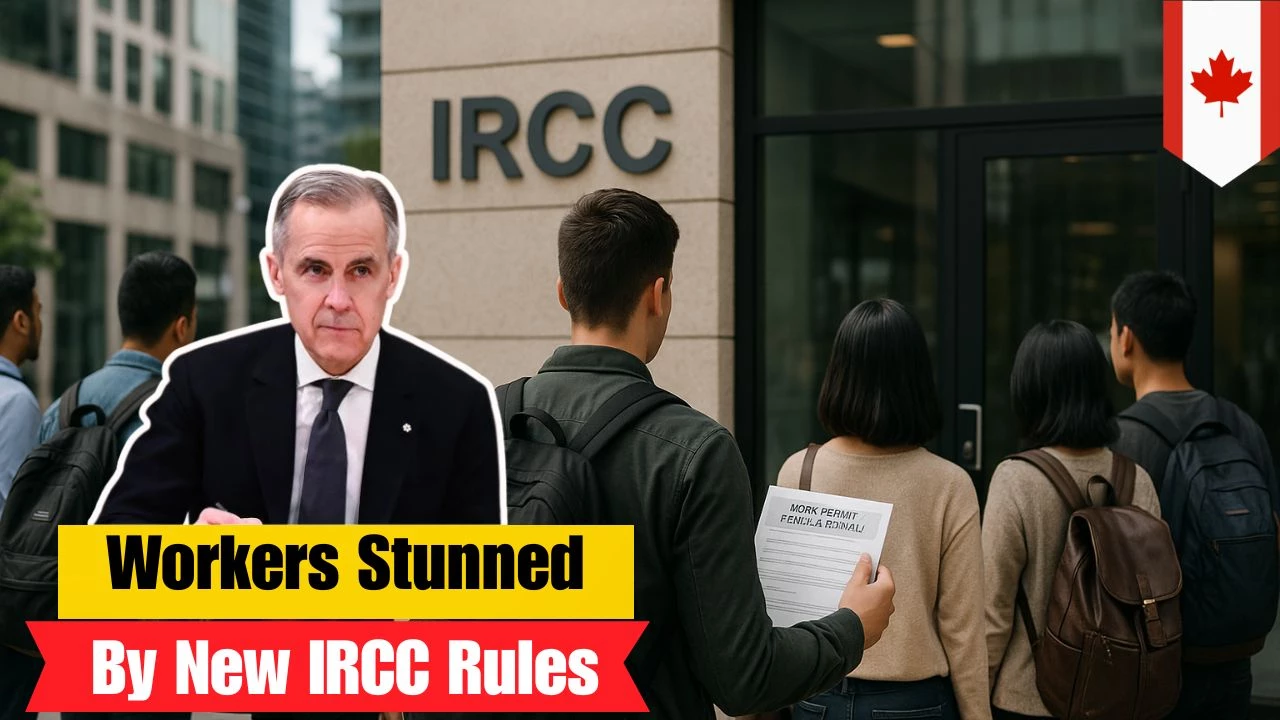
New IRCC Work Permit Rules — November 23, 2025 The recent updates to Canada’s IRCC work permit renewal process have left many international workers feeling confused and anxious. The new rules, aimed at streamlining the application process, require more documentation and stricter employer verification. Many foreign workers, unsure of how these changes will impact their status, have expressed frustration during this transitional period. One such individual, Aisha Khan, a software engineer from India, shared her unease, saying, “These rules feel overwhelming. I just want to know if I can continue working here before my permit expires.”
Background / Why it’s happening
The changes come as Canada seeks to enhance its immigration system amid growing demand for international labor in various sectors, particularly technology, healthcare, and services. The government aims to tackle issues related to extensive processing times and fraudulent applications that plagued previous systems. By tightening renewal requirements, the IRCC hopes to create a more organized and reliable work permit system.
What’s new / Key changes
- Increased documentation requirements for renewal applications, including proof of employment and compliance from employers.
- Mandatory online submissions, eliminating paper-based applications.
- Processing times expected to range from 6 to 12 weeks, depending on individual circumstances.
- Enhanced verification of an employer’s legitimacy and job offers through federal databases.
Human angle / real stories
One of the most impacted is Luis Garcia, a construction worker from Mexico. He expressed his fear of possible unemployment, saying, “I just moved my family here, and now I’m worried about whether I’ll be able to extend my work permit on time.” Many international workers like Luis are faced with the daunting task of ensuring their documentation is correct and submitted promptly to avoid losing their job stability.
Official statements
In an official statement, Immigration, Refugees and Citizenship Canada (IRCC) emphasized the importance of these changes. “These new rules ensure that we are retaining workers who are necessary for our economy while maintaining the integrity of the immigration process,” stated Minister of Immigration, Refugees and Citizenship, Sarah Ahmed. “We understand changes can be challenging; however, we believe they will ultimately benefit both workers and employers in Canada.”
Expert analysis / data insight
Legal expert Vincent Zhou commented, “While these regulations aim to protect job markets, they can overwhelm many workers. Clear communication from the IRCC is crucial to help applicants navigate these changes successfully.” Statistics indicate that, previously, over 30% of permit renewal applications faced delays due to incomplete documentation. The new rules may reduce this percentage significantly, though many may struggle initially.
| Requirement | Updated Details (2025) |
|---|---|
| Employment Proof | Recent pay slips + employer confirmation letter |
| Legal Status | Must remain valid until IRCC decision |
| Employer Compliance | Mandatory LMIA or LMIA-exempt verification |
| Processing Time | 6–12 weeks depending on applicant category |
| Submission Method | Online submission only; paper-based removed |
Impact / What readers should do
International workers are advised to prepare their documentation as soon as possible. It’s essential to consult with employers and legal advisors to verify compliance and understand the new application requirements fully. Early preparation can prevent last-minute issues that may jeopardize employment status.
The takeaway
Despite the uncertainty these new IRCC work permit rules present, there is hope that the implementation will lead to a more streamlined and efficient process. By staying informed and compliant, international workers can navigate these changes responsibly. As many adapt to the new rules, the collective resilience of the community offers a pathway to successful integration into Canada’s workforce.












Leave a Comment