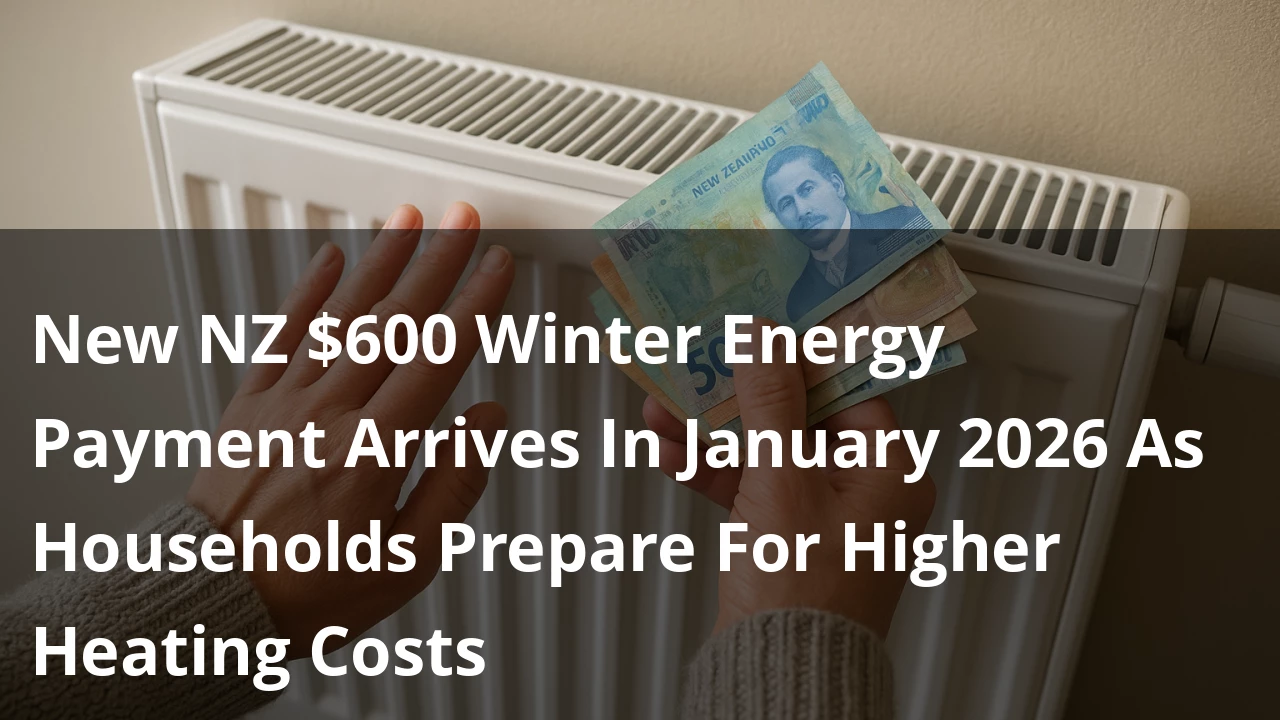
A new $600 Winter Energy Payment is set to roll out in January 2026, giving extra support to households facing rising electricity, gas, and heating expenses. The payment is designed to help low and moderate-income families, seniors, and vulnerable individuals manage higher winter utility costs. With energy bills expected to climb again in early 2026, the government confirmed that eligible recipients will receive the payment automatically through their existing benefit or pension system.
This detailed guide explains eligibility, payment dates, application rules, income thresholds, and how the $600 support interacts with other benefits.
Overview of the January 2026 Winter Energy Payment
The Winter Energy Payment is a seasonal top-up provided to support individuals and households during colder months. For January 2026, the government approved a one-time $600 boost due to elevated electricity prices, continued inflation, and the higher cost of winter essentials.
The payment will be issued directly to qualifying households, with no requirement to apply. It is not taxable, does not reduce other benefits, and does not need to be repaid.
The $600 will appear as a lump sum in January 2026 and will support energy costs for the early-year winter season across regions that experience colder temperatures during this period.
Why the Payment Is Being Introduced in 2026
Several factors contributed to the government’s decision to fund an additional Winter Energy Payment:
- Rising electricity and gas prices expected in early 2026
- Growing strain on low-income and fixed-income households
- Increased demand for heating subsidies
- Pressure on seniors due to inflation affecting essential items
- Broader cost-of-living challenges identified in government reports
Policy makers concluded that without added support, many households could be forced to choose between adequate heating and other basic needs.
Payment Date for the January 2026 Winter Energy Top-Up
The confirmed payment schedule is as follows:
- Payment Date: January 8–12, 2026
- Amount: One-time $600 lump sum
- Delivery Method: Direct deposit to bank accounts
Individuals receiving ongoing benefits or pensions will see the payment deposited into the same account used for their regular entitlements.
Who Is Eligible for the $600 Winter Energy Payment?
Eligibility is based on benefit status, age, residency, and income rules. Most qualifying recipients will receive the payment automatically.
Core Eligibility Categories
You are eligible if you receive any of the following:
- Superannuation
- Disability Support
- Jobseeker Support
- Sole Parent Support
- Supported Living Payment
- Veteran’s Pension
- Youth Payment
- Emergency Benefit
- Temporary Additional Support
- Family-based income support where heating costs are evaluated as high
Recipients of income-tested benefits are automatically included unless they opt out.
Senior Eligibility
Seniors receiving Superannuation, regardless of living situation, qualify for the $600 payment. Residency requirements include:
- Living in the country when the payment is issued
- Holding citizenship, permanent residence, or residency-class visa
- Meeting minimum residency requirements defined by social development guidelines
Disability and Health-Related Eligibility
Those receiving disability-related entitlements qualify automatically. The government noted that individuals with chronic health conditions, such as respiratory or mobility-related issues, often face higher heating costs and therefore receive priority support.
Low-Income Households
Low-income families with children will also be eligible if they receive:
- Family Tax Credits
- Accommodation Supplement
- Income Relief Assistance
- Hardship Support
The payment is designed to ease pressure on families whose winter energy costs exceed normal budgeting capacity.
Who Is Not Eligible?
Some groups will not receive the payment, including:
- Households with incomes above the defined threshold (varies by region)
- Individuals living overseas during January 2026
- People receiving full-time study assistance who do not qualify under income-tested rules
- Those with short-term visas that do not meet residency criteria
- Individuals who opted out of previous Winter Energy Payments and did not change that selection
If your benefit is suspended or cancelled in January 2026, you may not receive the payment.
How Income Thresholds Work
Income testing applies primarily to working-age beneficiaries and low-income families not on core government support.
Key factors influencing eligibility:
- Total taxable income
- Partner income (if applicable)
- Family size
- Region and average heating cost data
- Whether the household receives a supplement that already covers energy costs
Exact thresholds vary, but most households earning under the median regional income will qualify.
The government will publish updated 2026 thresholds closer to the payment date.
How the Payment Works With Other Benefits
The $600 Winter Energy Payment:
- Does not reduce any existing benefit
- Does not affect health subsidies
- Does not impact income-tested support
- Does not count as taxable income
- Does not affect Working for Families credits
- Does not reduce pensions or superannuation payments
This allows households to use the full amount directly toward heating and electricity without financial penalty.
How to Receive the Payment
Most people do not need to apply.
Automatic Payments
You will receive the $600 automatically if you:
- Already receive a qualifying benefit or pension
- Have valid banking information on file
- Live in the country during the payment period
- Meet income and residency rules
Updating Bank Information
Individuals must update bank details with the relevant social support agency before January 2026 to avoid delays.
Applying Only When Necessary
Some low-income households who do not receive government benefits may need to apply through:
- Local social support centres
- Online benefit portals
- Community advocates
These cases are evaluated on heating needs and household income.
Why Heating Costs Are Expected to Rise in 2026
Government energy reports show that electricity and gas costs are projected to increase due to:
- Increased generation costs
- Ongoing supply chain pressures
- Maintenance requirements for regional power networks
- Higher seasonal demand
- Inflation affecting energy infrastructure
These factors influenced the decision to introduce a larger-than-usual winter energy payment.
Impact on Seniors and Vulnerable Individuals
Seniors and medically vulnerable individuals stand to benefit most from the payment. Cold indoor temperatures contribute to health complications such as:
- Respiratory infections
- Cardiovascular strain
- Worsened mobility conditions
- Long-term chronic illness flare-ups
The government emphasized that keeping older adults warm is a priority for public health.
How Households Can Use the Payment
The payment can be used for:
- Electricity bills
- Gas heating
- Firewood and heating supplies
- Home insulation improvements
- Portable heaters
- Repairs to existing heating systems
- Winter clothing and bedding
Recipients have full choice in how to allocate the funds.
What If You Do Not Receive the Payment as Expected?
If the payment does not arrive between January 8 and 12, you should:
- Check your bank information
- Confirm your benefit status
- Log in to your online account
- Contact the social support hotline
- Request a manual review if needed
Payments may be delayed for individuals whose accounts require verification or correction.
Government Goals Behind the 2026 Payment
The January Winter Energy Payment supports larger policy goals:
- Reducing winter hospitalizations
- Ensuring seniors maintain safe indoor temperatures
- Preventing energy hardship among low-income families
- Stabilizing household budgets during a period of high inflation
- Supporting public health and energy affordability
- Reducing financial pressure on communities with colder climates
Officials described the payment as a targeted and necessary measure for winter stability.
The new $600 Winter Energy Payment arriving in January 2026 provides meaningful relief for seniors, families, and low-income groups facing rising heating costs. Automatic payment ensures that eligible households receive support without extra paperwork. As energy prices continue to rise, this payment will help households stay safe, warm, and financially stable during winter.








Leave a Comment